

As is common in crises around the world, women and girls in Jamaica have been disproportionately affected and gender-based violence (GBV) has become a critical concern during the hurricane recovery efforts.
GBV is already a notable concern in Jamaica with about 1 in 4 women having experienced physical violence by a male partner, nearly a quarter of girls have experienced sexual violence in childhood, and more than 7,000 calls have been made to the national GBV helpline since its launch in 2023, according to the United Nations Population Fund (UNFPA).
RedR Australia roster member, Katya, has been on the ground in Kingston working with the UNFPA as a gender-based violence in emergencies (GBViE) specialist. UNFPA has been working closely with the Government of Jamaica and national partners to ensure that women, girls, and young people receive the support they need during recovery. Access to essential health services like sexual and reproductive health care, psychosocial support, and timely and trauma-informed assistance for survivors of gender-based violence has been critically important.
Start local
Through the UNFPA GBV in emergencies project, Katya has worked with both partner government institutions and women led civil society organisations – including Eve for Life, Women's Centre of Jamaica Foundation, Jamaica Constabulary Force and the Bureau of Gender Affairs, to ensure that the most vulnerable are not left behind.
Her role has included strengthening inter-agency coordination, helping to integrate humanitarian standards into the existing systems, and ensuring lifesaving GBV services are delivered through established national structures. Katya has also been supporting the operationalisation and quality monitoring of Women and Girls Safe Spaces (WGSS), and strengthening prevention, response, and protection interventions for communities.
Alongside local partners, UNFPA was able to provide survivor-centered psychosocial support, case management services, awareness raising activities, Dignity Kits and Hygiene Kits to communities impacted by hurricane Melissa.
“It has been an intense five-month project, but in this time, (the partners) took ownership of the activities, and that allowed the program to evolve on its own within the Jamaican context in a way I’ve never seen before,” Katya relays.
“I didn’t need to re-invent the wheel in GBV response but rather enhance what they were already doing with the community and apply a humanitarian lens, focusing on GBV in emergencies in their established work.”
Katya notes that the partners contextualised and piloted the WGSS model through different community entry points, simultaneously. One space was introduced through a female livelihood skills-building academy, another through a community-driven initiative where a private landowner donated land that is now also being transformed into a community garden, and another within an all-girls high school, where nearby schools now bring students to learn about GBV and their rights.
As word about the spaces spread, excitement quickly grew within the surrounding communities. People began contributing ideas, support, and energy into helping the spaces expand, with communities gradually adapting the model in their own ways to help address and prevent GBV.
“They taught me new ways of looking at Women and Girls Safe Spaces, how, when communities are given ownership of the model, they can transform it into something far more sustainable, creative, and grounded in the realities of the people it is meant to serve,” Katya says.
A safer community
Katya recognises that humanitarian work can be daunting at times.
“We work to only address one of their many needs and knowing we will never be able to truly fix a situation,” she says.
“But when I get to go to a WGSS I’m reminded that we’re working to create a space for communities to have discussions they never would have had before, about gender-based violence and their rights.”
Katya believes that when you create a safe space for women and girls to do these activities, they start flourishing.
“At first, they’re always a bit timid and quiet but after a session or two they have a newfound confidence and voice they didn't have before. They come excited to talk more and have intergenerational discussions in the same room as men and women and address these issues together,” she shares.
“I think (there’s) something about a trauma-informed, safe and guided environment that opens a dialogue where they express themselves to their communities and families on issues they would have never been able to do before. It’s really cool to know you played a part in making that happen.”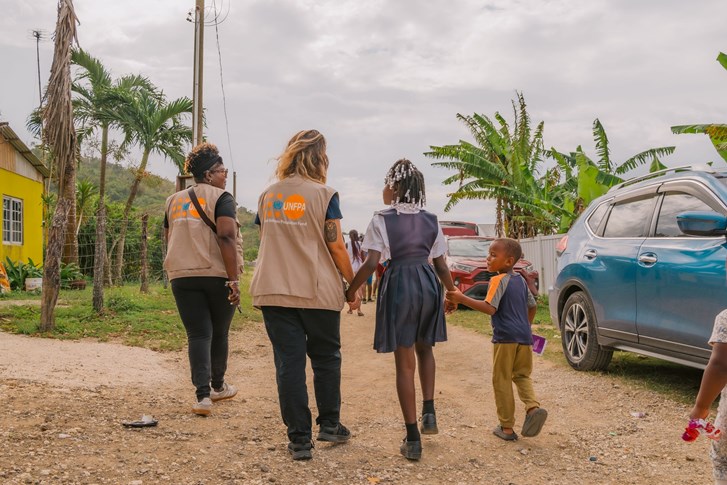
Walking side by side with GBV survivors
Early in Katya’s career she worked with GBV survivors around the world, with many explaining to her how the process of getting help was often more traumatising than the violence they experienced in the first place. This knowledge helped her understand the experience of survivors at every stage of a program and service.
“When I look at a facility or a shelter, or design a training module or budget, I put myself in their shoes and consider their perspectives, and I think through every design, layout, and service from a sense of how we can enhance safety and wellbeing,” she says.
While Katya agrees you need strong skills in project management, budget oversight, coordination and know all the technical guidelines out there - nothing has taught her more about working in GBV support than the people affected.
Each humanitarian deployment offers a different experience
Prior to her role in Jamaica, Katya was deployed through RedR Australia to work with the UNFPA in Nepal. She has family ties to the Dominican Republic, and while Dominican and Jamaican cultures are very different, she feels there’s something very rewarding about contributing to the Caribbean and feeling a sense of connection to the people and communities she serves.
“It was an interesting experience going from the Nepal context to the Caribbean. I think for me it’s a reminder of what it means to serve a region I come from,” she says.
“It doesn’t make any experience any less great, but it’s a different kind of connection to the work I’ve been able to develop that I didn’t anticipate.”
Learning about a country from community
Katya explains the difference between going to a country as a tourist and as a humanitarian: “to me it’s about learning history from unseen history makers themselves.”
“As a tourist you see all the nice things the country will show you. But as a humanitarian, serving the community and working for people in most need, you connect with the community on a whole other level. I’ve been able to work with GBV survivors, activists, refugees, discriminated groups, and learn their story beyond a web search or a book.”
Learn more about the work of RedR Australia’s roster members.
